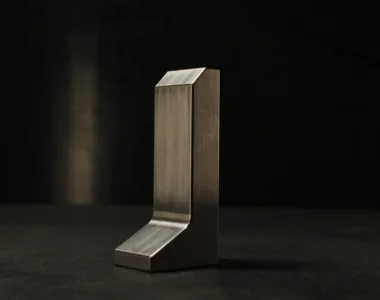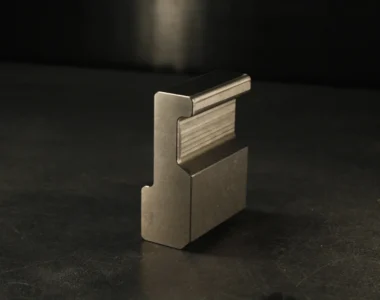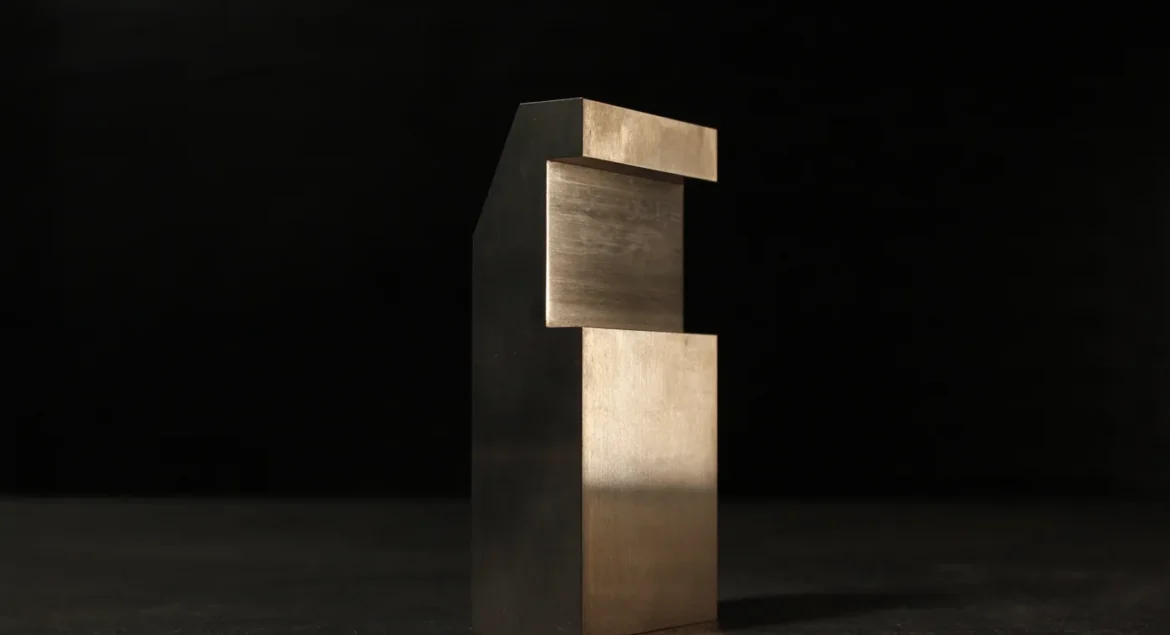
How much lighter is a tungsten bucking bar than steel? At the same size, it isn’t lighter at all. Tungsten heavy alloy is a little over twice as dense as steel, so a tungsten bar weighs more than twice what a steel bar of identical dimensions does. Tungsten comes out ahead in two other ways. For a given backing weight the tungsten bar is about a quarter smaller in every direction, and builders who switch to tungsten usually settle on a lower bar weight than the traditional steel starting point.
Same size: tungsten weighs more than twice as much
Steel runs about 7.85 grams per cubic centimeter. TungstenParts’ published density figures put tungsten heavy alloy at 17.0 to 18.8, depending on the ASTM B777 class. That makes the alloy 2.2 to 2.4 times denser than steel. In shop units, steel is about 0.28 pounds per cubic inch and tungsten heavy alloy runs 0.61 to 0.68. Multiply by length, width, and thickness and you can estimate the weight of any block in either metal.
Take a straight 4 by 1 by 5/8 inch block, a size common in RV kit sets. That is 2.5 cubic inches. In steel it weighs about 0.7 pounds. Our ETBB01 is the same size in tungsten heavy alloy and weighs 1.65 pounds. Swap a steel bar for a tungsten bar of identical dimensions and you pick up almost a pound.
Same weight: the tungsten bar is the small one
Now match the weight instead. A steel bar needs about 5.8 cubic inches to reach 1.65 pounds, against 2.5 for tungsten, so the tungsten bar takes up 43 percent of the volume. Keep the proportions of the 4 by 1 by 5/8 block and the steel version measures about 5.3 by 1.3 by 0.8 inches, roughly a third bigger in each direction. That extra third is what has to fit between a stiffener and your hand.
At the rivet, mass does the work, so a 1.65 pound steel bar and a 1.65 pound tungsten bar back it the same way. The bucking bar weight guide covers why. Every bar we sell is made from the tungsten heavy alloy that shrinks the bar without losing weight, so the pound rating on it means what it does on a steel bar. If you already own a steel bar and want its tungsten equivalent, the steel to tungsten cross reference converts it size by size.
A set weighs the same, it just takes less room
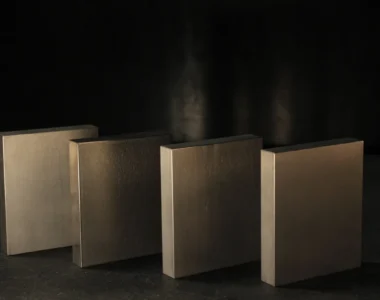
Carry a set up a ladder or into a wheel well and tungsten saves bulk, not pounds. Our MRO field set is four bars totaling 9.95 pounds. The same 9.95 pounds in steel would take about 2.3 times the space in your bag and your hands. Nothing about the pound rating changes when you switch metals.
Same job: builders choose a lighter bar
This is where tungsten is lighter in a way you can put a number on. Traditional guidance starts a 3/32 inch rivet with about 2 pounds of bar. Builders working with tungsten usually land at 1 to 1.5 pounds, because a small dense bar is easier to hold steady against thin skin. The same shift runs up the rivet sizes.
| Rivet diameter | Traditional starting weight | Where builders using tungsten land | Lighter by |
|---|---|---|---|
| 3/32 in | about 2 lb | 1 to 1.5 lb | 0.5 to 1 lb |
| 1/8 in | about 3 lb | 1.5 to 2 lb | 1 to 1.5 lb |
| 5/32 in | about 3 to 4 lb | 2.5 to 3.5 lb | about 0.5 lb |
| 3/16 in | about 4 lb and up | 3.5 to 4.5 lb | up to 0.5 lb |
The gap is widest on small rivets and nearly gone by 3/16 inch. Use the right-hand columns as a starting point. Thick material or poor access calls for the traditional number, the same reasoning laid out in the 3/32 inch rivet breakdown.
When a steel bar is still the better call
Tungsten costs more up front, and some people prefer a big bar. In a Van’s Air Force thread on tungsten bars, one builder said they do most of their rivets with a large steel bar because it is easier for them to keep square on the rivet, and they use a tungsten bar for about 15 percent of them. An A&P in the same thread said tungsten is smaller but heavier, and the extra weight makes it act like a much bigger bar. Hand size and how long you work in one position both move the answer. Our tungsten versus steel comparison sets the trade-offs side by side.
Part of the price comes back. A worn steel bar is scrap steel. A worn tungsten bar still holds nearly all of its material. USA Tungsten’s buyback program credits returned bars toward your next order by weight, and tungstenbuyers.com buys heavy alloy scrap outright.
Common questions
Is a tungsten bucking bar lighter than a steel one?
Not at the same size. A tungsten bar weighs more than twice what a steel bar of identical dimensions does. It is smaller than a steel bar of the same weight, and builders who use tungsten tend to choose a lower weight than the traditional starting point.
How much heavier is tungsten than steel at the same size?
Tungsten heavy alloy runs 17.0 to 18.8 grams per cubic centimeter against 7.85 for steel, which is 2.2 to 2.4 times. A 4 by 1 by 5/8 inch bar is about 0.7 pounds in steel and 1.65 pounds in tungsten heavy alloy.
How much smaller is a tungsten bar than a steel bar of the same weight?
About 43 percent of the volume. With the same proportions, each dimension is roughly a quarter shorter.
Does a tungsten bucking bar work differently than a steel bar of the same weight?
At the rivet, mass does the work, so a tungsten bar and a steel bar of equal weight back the rivet the same way. The difference is how easily you can place the bar and hold it square.
Can I use a lighter bar if I switch to tungsten?
Often, on thin skin with good access. Builders using tungsten commonly land at 1 to 1.5 pounds for 3/32 inch rivets, against about 2 pounds traditionally. In thick material or tight access, stay with the traditional weight.
To pick a weight for your rivet size, use the Selector.