How do you match a bucking bar’s weight to your rivet gun and air pressure? Start with the gun, not the bar. A gun’s size sets how much force lands on the manufactured head with each blow, and the bar has to react that force without bouncing. Undersize the bar for the gun and it bounces off the tail instead of holding still. Oversize it and you are carrying weight the job does not need. The match runs gun size to rivet diameter first, then rivet diameter to bar weight, then air pressure last, set low and walked up until the bar goes solid.
Step 1: Match the gun to the rivet
Rivet guns are sized by piston and stroke, labeled 2X, 3X, 4X, and up. Each size has a practical range. A 2X gun is built for 3/32 inch rivets and stretches to 1/8 inch. A 3X gun is built for 1/8 inch, still handles 3/32, and is marginal on 5/32. A 4X gun steps up to rivets as large as 1/4 inch. Running a rivet at the top or bottom of a gun’s range works, but it is not where the gun performs best, and it is the first place a weight mismatch with the bar shows up.
Step 2: Pick a bar weight class for that pairing
Once the gun and rivet size are set, bar weight follows the rivet, not the gun directly. The bucking bar weight guide and the size and weight chart carry the specific numbers by rivet diameter, and the 3/32 inch rivet breakdown shows how that range narrows for access and material thickness. As a rule, a 2X gun on 3/32 work pairs with a light to mid-weight bar, a 3X gun on 1/8 inch work moves into the mid-weight range, and a 4X gun on larger rivets calls for a heavy bar (3 lb and up). Use the Selector to land on an exact weight for your rivet size rather than guessing from the gun size alone.
Most shops and builders own more than one gun size, since a project rarely stays on a single rivet diameter from start to finish. Matching bar weight to gun size across the whole set, not just for one rivet at a time, keeps the bucking side of the job consistent no matter which gun someone picks up. A shop standardizing on a small set of bars for a line or bench benefits the same way a single builder does, just at a larger scale.
Step 3: Understand why weight does the work, not size
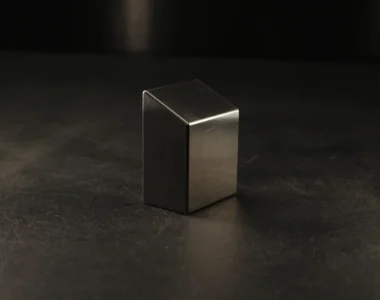
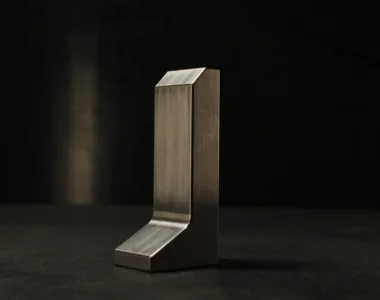
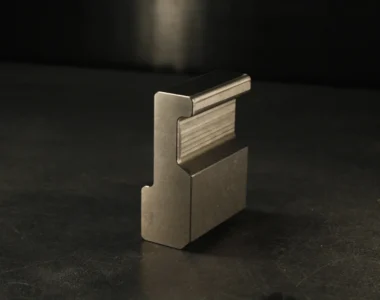
A bucking bar reacts gun force through mass, not bulk. That is why a compact tungsten bar can do what a much larger steel bar cannot: tungsten carries the high density alloy behind the bar’s punch, packing more reactive mass into a bar small enough to fit tight access. Two bars can be the same physical size and behave completely differently on the same gun, because weight, not volume, is what absorbs the blow.
Step 4: Set air pressure low and start on scrap
Air pressure is shop practice, not a published number. It depends on the gun, the hose, and the rivet, and the step-by-step riveting guide covers how to dial it in on scrap before touching the workpiece. What matters for matching gun to bar is the starting point: set pressure low for the bar weight class you are running, not for the rivet alone. A light bar needs less pressure to feel solid than a heavy bar does, because there is less mass to move the gun’s energy into.
Step 5: Step pressure up until the bar goes solid
Raise pressure a little at a time and pay attention to how the bar feels in your hand. A bar that is right for the gun goes from lively, with a faint bounce you can feel through your palm, to solid, with no bounce at all, over a narrow pressure range. If the bar never goes solid no matter how far you raise pressure, the bar is too light for the gun and rivet combination, not the pressure setting.
Step 6: Confirm with a measurement, not just feel
Feel gets you close. A shop head measurement confirms the match. Check that the formed head measures at least 1.5 times the rivet diameter wide and at least half the diameter tall, the same tolerance used across this series. A shop head that will not reach width even at higher pressure, or one that mushrooms wide before it reaches height, both point back to a bar weight that does not match the gun, not a pressure problem to chase further.
What a mismatch feels like, and what to do with a bar you no longer need
A bar that is too light for its gun bounces and never settles, no matter how the pressure is set. A bar that is too heavy for the rivet feels dead and hard to control in tight access, even though it holds still. Both point to the same fix: change the bar, not the gun or the pressure. See diagnosing a bucking bar that is too heavy or too light for the full symptom list.
If matching bars to guns leaves you with a bar that no longer fits your work, tungsten bucking bars are tungsten heavy alloy, one of the accepted scrap classes at tungstenbuyers.com. A bar sitting in a drawer because it does not match your current gun still has scrap value; it does not have to just sit there.
Common questions
What rivet gun size works with which bucking bar weight?
A 2X gun on 3/32 inch rivets pairs with a light to mid-weight bar. A 3X gun on 1/8 inch rivets moves into the mid-weight range. A 4X gun on rivets up to 1/4 inch calls for a heavy bar, 3 lb and up. Use the Selector to confirm an exact weight for your rivet size.
Why does bar weight matter more than bar size for matching a gun?
A bucking bar reacts gun force through mass, not physical bulk. Tungsten’s density lets a compact bar carry as much reactive mass as a much larger steel bar, so weight is the number that has to match the gun, not the bar’s outward size.
What happens if the bucking bar is too light for the gun?
The bar bounces off the rivet tail instead of holding still, and no amount of extra air pressure fixes it. The shop head stays undersized or the rivet leans, because the bar is not absorbing the gun’s energy.
Do I need a different bar for every gun size?
Not one-to-one, but you do need a weight class that matches the rivet range you are working, since gun size and rivet size move together. A small set covering light, mid-weight, and heavy bars handles most gun and rivet combinations on a typical build or repair.
Ready to match a bar to your gun and rivet size? Use the Selector or request a quote on a kit that covers your full weight range.